
From preserving Capiz seafood to helping businesses reach bigger markets, Glacier Panay shows why cold chain infrastructure matters to the future of food and commerce across Panay Island.
Fresh seafood. Premium meat. Frozen vegetables. Restaurant-quality ingredients.
We see these products in supermarkets, restaurants, hotels, and kitchens every day. However, we rarely see the carefully managed journey that keeps them fresh and safe before they reach us.
Behind that journey is the cold chain.
In Roxas City, Glacier Panay Refrigeration Services Corporation provides the infrastructure that helps businesses store, freeze, manage, and distribute temperature-sensitive products across Panay Island.
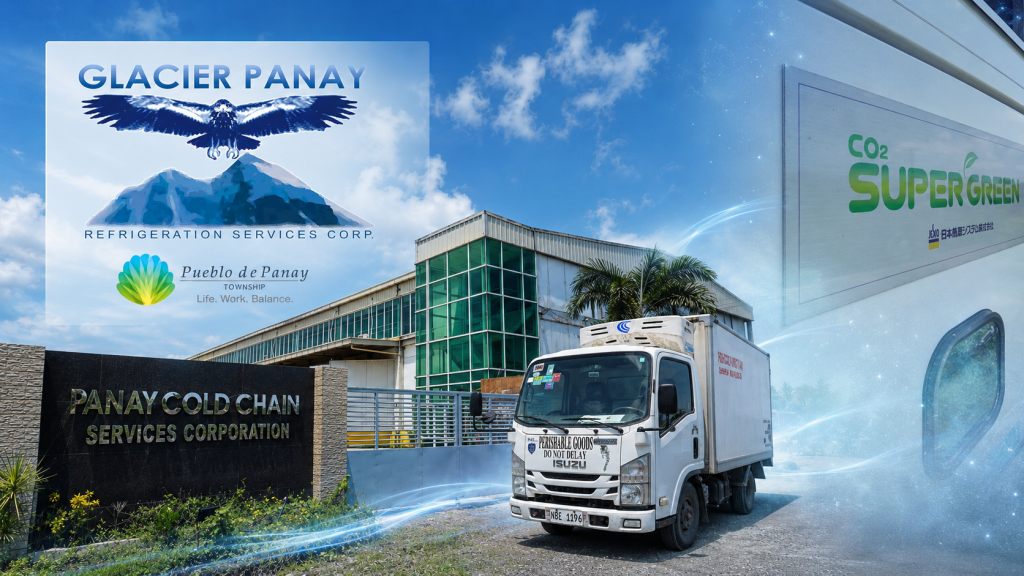
Glacier Panay provides cold storage and integrated cold chain solutions from Pueblo de Panay in Roxas City, Capiz.
Located inside Pueblo de Panay Township, Glacier Panay is more than a cold storage facility. It provides integrated cold chain solutions that help businesses protect product quality, reduce waste, improve efficiency, and reach larger markets.
For a province known for seafood and an island rich in agriculture and food production, that infrastructure matters.
More Than Cold Storage: What Glacier Panay Does
Cold storage is only one part of Glacier Panay’s operation.
The company provides a range of cold chain services, including:
Cold storage
Blast freezing
Inventory management
Warehouse management
Cross-docking
Value-added logistics solutions
Food trading and product sourcing
Together, these services help seafood processors, manufacturers, retailers, restaurants, distributors, importers, and exporters maintain product quality throughout the supply chain.
There is also a practical business advantage.
Building and operating a refrigerated warehouse requires significant investment, technical knowledge, energy, equipment, and regular maintenance. By working with Glacier Panay, businesses can use established cold chain infrastructure without having to build everything themselves.
As a result, companies can focus more of their resources on growing their operations.
Why Glacier Chose Pueblo de Panay
Glacier Panay represents an important chapter in the company’s growth.
It was Glacier’s first cold storage facility outside Metro Manila. As a result, the company brought its services closer to one of the country’s important food-producing areas.
The location was also strategic.
Pueblo de Panay provides access to key areas across Panay Island while offering the infrastructure needed for logistics and business operations.
From its base in Roxas City, Glacier Panay can serve businesses in Capiz and reach markets across Iloilo, Aklan, Antique, and other parts of the island.
Therefore, customers can access cold chain infrastructure closer to where many products are produced, processed, sold, and consumed.
Supporting Capiz’s Seafood Industry
Few products demonstrate the importance of the cold chain better than seafood.
Capiz is widely known for its seafood industry. However, maintaining quality after harvest requires careful temperature control at every stage.
If that chain is interrupted, freshness, shelf life, food safety, and product value can suffer.
Glacier Panay helps businesses manage that risk through blast freezing, temperature-controlled storage, inventory management, and other cold chain services.
As a result, seafood processors and suppliers can preserve product quality while reducing spoilage.
Reliable cold chain infrastructure can also help local producers reach customers beyond their immediate markets.
A product harvested in Capiz does not have to remain a purely local product. With the right processing, storage, and logistics behind it, that product can travel much farther.
A Strategic Cold Chain Hub for Panay Island
In logistics, location can determine efficiency.
Glacier Panay’s location inside Pueblo de Panay gives businesses access to cold chain services from a strategic point in Roxas City.
Because of this location, companies can better manage transportation times while maintaining the temperatures required for sensitive products.
The opportunity also extends beyond seafood.
For example, meat suppliers, food manufacturers, retailers, restaurants, and distributors all depend on reliable storage and logistics.
For companies expanding across Panay Island, access to this infrastructure can make growth easier to manage.
Instead of asking, “Where will we store everything if we expand?” a business can begin asking a more interesting question:
“Which market do we enter next?”
Technology That Protects Product Quality
Modern cold chain operations depend on accuracy.
Temperature, inventory, storage conditions, and product movement must all be carefully managed. Otherwise, small errors can become expensive losses.
For this reason, technology plays an important role in Glacier’s operations.
Digital warehouse systems, inventory tracking, temperature monitoring, and modern refrigeration equipment can give businesses better visibility over their products.
In turn, better monitoring can improve accuracy, food safety, and efficiency.
For Glacier, technology is not simply about having newer equipment. Instead, it is about giving customers greater confidence in what happens to their products after they enter the cold chain.
Making Cold Storage More Sustainable
Refrigeration is essential. However, it also requires a significant amount of energy.
As a result, sustainability is becoming increasingly important for the cold chain industry.
Glacier has responded by investing in more environmentally responsible refrigeration technology. One notable initiative is its use of a carbon dioxide (CO₂)-based refrigeration system, which has a lower global warming impact than many conventional synthetic refrigerants.
In addition, the company focuses on energy efficiency, equipment improvement, and preventive maintenance.
These efforts matter because the future of food logistics will not be measured by storage capacity alone.
Instead, businesses will increasingly need infrastructure that can perform reliably while using resources more responsibly.
Creating Opportunities Beyond the Warehouse
The economic impact of cold chain infrastructure extends beyond the warehouse walls.
Glacier Panay creates jobs in logistics, engineering, warehousing, refrigeration, operations, and supply chain management.
However, its wider impact comes from the businesses that depend on it.
For example, a seafood processor can increase production without immediately building another cold storage facility. A restaurant supplier can carry more inventory. Meanwhile, a distributor can reach another market, while a growing food company can expand with proper storage behind it.
In this way, Glacier does not need to manufacture the product to help the business behind it grow.
Instead, it provides part of the infrastructure that makes growth possible.
That idea closely reflects Pueblo de Panay’s mission to be a meaningful catalyst and a source of pride in the communities it serves.
Sometimes being a catalyst means creating the right conditions for someone else’s business to move forward.
When Cold Storage Becomes a Business Partner
One customer story shows how this works in practice.
During a seafood processor’s peak harvest season, production volumes increased significantly. Consequently, the company needed more cold storage capacity while continuing to meet customer commitments.
Glacier provided additional storage, blast freezing, and coordinated inventory management.
As a result, the processor was able to handle the increase without sacrificing food safety or product quality.
The value went beyond additional warehouse space.
The customer gained room to grow without immediately making a major investment in new cold chain infrastructure.
That is the difference between providing storage and providing a business solution.
Building the Future of Food Logistics on Panay Island
Demand for reliable cold chain infrastructure is likely to grow as food businesses expand and supply chains become more advanced.
Seafood is only part of the opportunity.
Meat, poultry, frozen vegetables, processed food, pharmaceuticals, and other temperature-sensitive products also require dependable storage and distribution.
Therefore, Glacier Panay has room to deepen its services, improve technology, strengthen sustainability, and support more businesses across Panay Island.
For Pueblo de Panay, meanwhile, Glacier demonstrates another dimension of what an integrated township can support.
Education develops talent. Businesses create employment. Financial institutions provide capital. At the same time, logistics infrastructure helps products and companies move.
Each plays a different role. Together, however, they create an environment where economic activity can grow.
A Shared Vision for Growth
Pueblo de Panay was built around a mission to become a meaningful catalyst and a source of pride in the communities it serves.
Glacier Panay brings that idea into the food and logistics sector.
The company helps protect products from local industries while giving growing businesses access to important infrastructure. In addition, it creates specialized jobs and supports more efficient supply chains.
At the same time, Glacier continues to explore technologies that can make cold storage more sustainable.
For businesses considering expansion into Capiz or elsewhere on Panay Island, infrastructure like this sends an important signal.
After all, growth does not happen through ambition alone.
Businesses need the right people, capital, connectivity, services, and logistics behind them.
Glacier Panay provides one important piece of that equation.
From its home in Pueblo de Panay, the company is helping keep the products, businesses, and opportunities of Panay Island moving forward.